Storyframe
Have a code? Get early access

For schools and researchers

The AI writes the story. The context decides what it teaches.

A general-purpose AI model is confident, not careful. For a child, a wrong clock or an invented fact is a lesson learned wrong. Storyframe surrounds the model with educational context, and checks what comes back against that context before any child sees it.

1 · What to learn

A map of what comes before what.

Every story starts from one skill on a map of 1,613 skills, joined by 3,278 links that say which skills come first. Each skill carries its objective and the mistakes children most often make with it. Skills point to published standards where they apply, such as the Common Core and England’s National Curriculum.
2 · Where it happens

A world the child recognizes, with its own rules.

A family or teacher chooses where the story is set: their own street, an island, ancient Egypt, outer space. Each world carries rules for what a story there must get right and must avoid. Worlds with real history or science carry a set of facts with sources: the writer may state only those facts, and the story is rejected if it cites anything else.

3 · Who checks it

Code, AI judges, then people.

Code checks each story’s logic, reading level and facts, and every word passes a safety check. AI judges then read it against the skill. Then a named reviewer must approve it before any child sees it, and in classroom mode a specialist in the subject must also sign it off.

Mistakes are part of the lesson

A wrong answer isn’t a dead end.

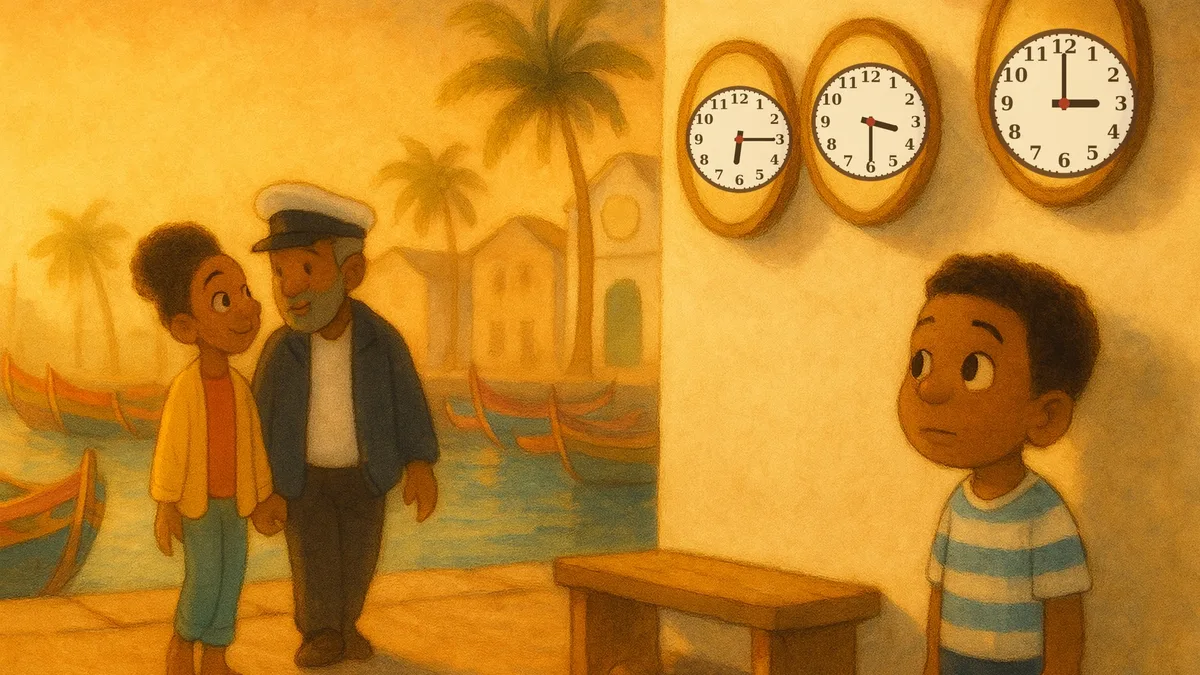
Each question has one right answer and wrong answers built from real misconceptions. When a child picks one, the story acts out what that mistake would mean: read the long hand as the hour, and Kofi decides it’s six o’clock, gives up on the ferry and goes for a snack, just as the ferry sails at half past three. Then the child tries again. The record of which mistake a child made is what makes the next story, and the conversation afterward, useful.

The specialist’s sign-off

  • Right throughout: every fact, number and word in the story.
  • Each mistake explained: every wrong answer matches a real misconception and shows why it’s wrong.
  • Sound method: the way it teaches the skill is one the field stands behind.
  • Safe: nothing a child shouldn’t see or hear.

Values are drawn, never painted

A model can paint the harbor. It doesn’t get to set the clock.

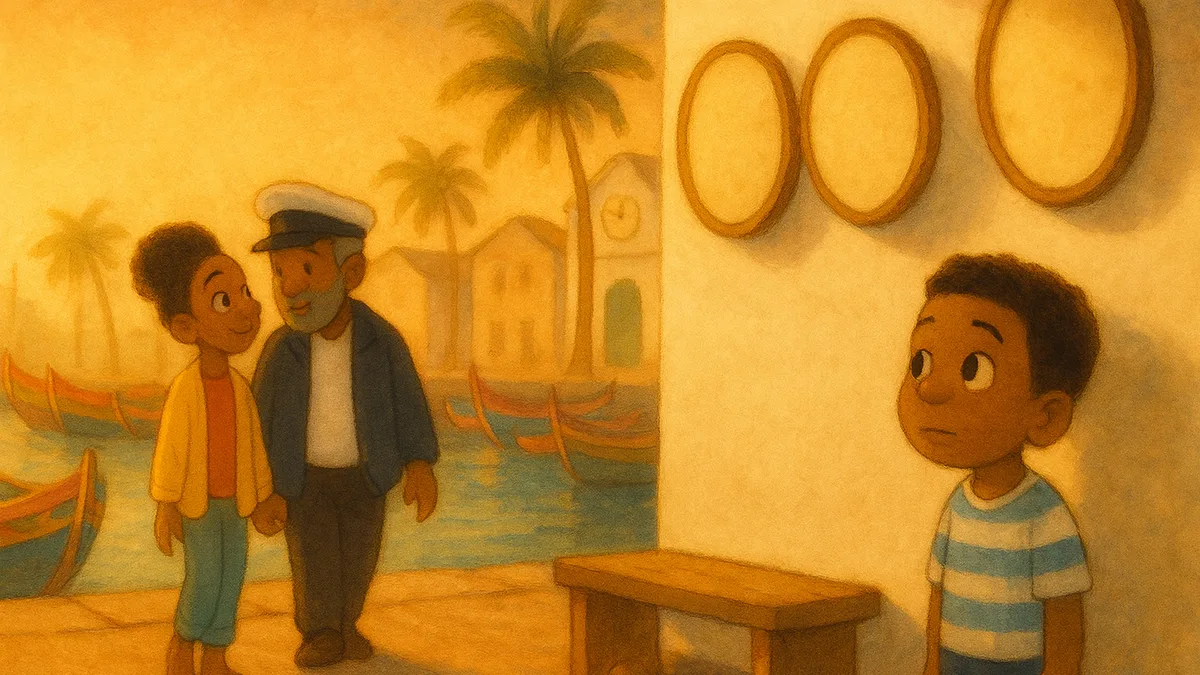
In our tests, the best image models wrote a value correctly when they were told exactly what to write. Where a value was natural but nobody gave one, they invented one, confidently: a clock tower at 6:15. So Storyframe paints the scene and draws every value from the lesson itself.

The painted scene as the image model made it: three blank clock faces on a wall, and in the background a clock tower with hands showing a time no one asked for.
As painted. The clock faces are left blank on purpose. The model added a tower clock in the background, with a time of its own.
The same scene in the lesson: the three clocks drawn exactly at quarter past six, half past three and three o’clock, and the tower clock’s hands removed.
As a child sees it. The three times come from the lesson, drawn exactly: the answer and two real mistakes. The tower clock’s invented hands are removed, so there’s no fourth time to confuse a child.

For researchers

Evidence by class, never by child.

In classroom mode the class plays together on the board. Storyframe keeps a dated log for each class: which question, which answer, which misconception a wrong answer reflects, and which attempt it was. A research partner receives it with classes labeled C1, C2 and so on, and nothing about any child, class name or teacher. There are no student accounts.

We’re looking for university partners in early literacy and early math for a first classroom study in 2027, run under the partner’s ethics review.

What we never collect

  • A child’s words or voice never reach an AI model.
  • No photos of children, and no child accounts in classrooms.
  • A parent’s consent comes before anything is made for a family.
  • Everything a family types is checked by moderation before a model writes from it.

Less data about the child, more context about the lesson.

Where we are, November 2026

Storyframe is early. Three stories have passed review so far, and we’re inviting subject specialists in literacy and math to review more. Lessons open to children only as they pass. We’ll publish what the study finds, including what didn’t work.

For teachers, specialists, librarians and researchers

Help build the context.

You know the mistakes children make, the facts a story must get right and the worlds children come from. Send one thing at a time. We read every contribution, and anything we use goes through the same checks and reviews as everything else.

What are you sending?
Please don’t include any child’s name or details.

We use your email only to ask about your contribution or to credit you. Ask us to delete it any time.

Get early access.

We’re opening Storyframe a few families, teachers and programs at a time. Tell us who you are, and we’ll write once, when it’s your turn.

I am a…

We use your email only for early access. Ask us to delete it any time.

Picture books that teach one real thing.Get early access